
Get Rid of Fleas
Prices from £90 +VAT for a house with up to 3-bedrooms
To get rid of fleas from your home or business premises call 0800 026 0308
Guarantee
Treated areas in a domestic environment are guaranteed for 1-month after the first spray. The guarantee is only valid as long as the correct preparation and aftercare have been carried out.
- The guarantee does not apply to premises where more than 2 animals are present.
- Commercial offices are not guaranteed.
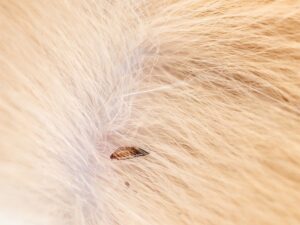 Fleas are small parasites that grow to about 3mm long and feed off the blood of cats, dogs and humans. They normally live for 2 to 4-months. Cat fleas are the most common type of flea found in the UK. Their eggs are comparatively large, 0.5 mm in length, oval or round in shape and pearly white in colour. They are sticky and attract debris from their surrounding habitat which camouflages their appearance.
Fleas live in carpets and are rarely seen, only leaving the carpet to feed by jumping onto a cat or dog. If they jump onto soft furnishings or clothing they’ll always return to the carpet. They don’t live on humans and only bite them if a cat or dog isn’t available to feed on. They are only able to breed when feeding on their preferred host. A home or business will still need treatment even when the fleas’ preferred host pet isn’t present as they will be forced to feed on humans.
Why should a flea infestation be treated?
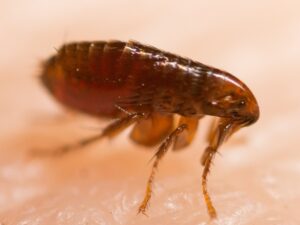 Each female flea can lay up to 25 eggs per day. For every flea found on a cat there will probably be a hundred more living in the carpets within its home. Treating the preferred host pet will not deal with a heavy infestation.
If fleas aren’t treated they will continue to breed and develop into a huge infestation. They can hitch a ride on people’s clothes and spread to other people’s homes, offices and public places such as restaurants, theatres, cinemas etc.
Fleas cause discomfort to both humans and animals when they bite. They often prefer women and children to men. People react in different ways to bites and the reaction may be immediate or may take several hours. A usual reaction is itching but some people may experience swelling as well.
What are the signs of a flea problem?
The most obvious sign of a flea problem is when people get bites, usually on their feet, ankles and legs because fleas can’t jump higher than six inches. Bites can occur on other parts of the body, particularly on children as they are more likely to be playing on or lying on the carpet. Often a flea infestation will go unnoticed until the absence of the host pet, after which the fleas are forced to look for an alternative source of food so they bite humans. If the infestation becomes huge and the carpet pile is low, the fleas will be visible on the carpet. They may also be seen on the cat or dog.
Preparation you must undertake prior to treatment
- Clear all clutter from the floor (toys, books, boxes, shoes etc).
- Vacuum the total floor area, with particular attention to the edges of carpets.
- After vacuuming remove the vacuum bag and place in an outside bin.
- Mow lawns as fleas may survive in outside areas in warm weather.
- Fit pets with fresh flea collars and treat them with a topical insecticide specifically for animals.
Aftercare
- Immediately after treatment let the spray dry; don’t clean or wipe up any puddles.
- Don’t touch the treated surfaces or let pets into the treated area until dry.
- If you do get the insecticide on your skin wash it off immediately.
- Reduce the humidity by opening windows and increase the heat to allow the treatment to work most effectively.
- Do not vacuum for at least 2-weeks.
- For the first week of vacuuming, vacuum at least once a day but preferably twice.
- Do not avoid treated areas as fleas can remain dormant in their pupae cases for up to a year unless stimulated by warmth, movement and carbon dioxide.
- If pets have been treated keep them indoors so that any fleas present in the 3-week period after treatment will feed on them rather than humans.
How our treatment works
Our technician will apply a residual insecticide to all the floors. The fleas will absorb the insecticide, although they don’t die instantly. You may see fleas for up to 3-weeks after the treatment as some fleas may have been in their pupae cases during the treatment and will emerge at different times.
In shared, communal or multi-occupancy buildings it may be necessary to spray monthly until the infestation is eradicated.
In offices it is vital that people with pets, especially cats, get their homes and animals treated ongoing, otherwise flea problems in the office will continue.
Products we use
The technician will state which insecticide has been used on the report they give you after they have completed the treatment. Click each product to access its safety data sheet. All insecticides are biodegradable, almost odourless, non-tainting and don’t corrode or stain.
Insectidice sprays
Insecticide powder
Insect fogging
Special situations
- In shared, communal or multi-occupancy buildings it may be necessary to spray on a monthly basis until the infestation is eradicated.
- In offices it’s vital that people with pets, especially cats, get their homes and animals treated ongoing, otherwise flea problems in the office will continue.
- Often in a previously empty house where a cat was living there will be a flea problem once the new occupiers move in. The fleas lie dormant until a new host arrives. The original occupiers may have not realised there was a problem as the fleas would have been feeding on their pet not them.